
The plan is designed, the attachments are on, the IPR is done — and now the case comes back as a set of trays you hand to the patient. Delivery is a short appointment, but it decides everything that follows. A case that seats well, handed to a patient who understands the rules, will track. A rushed hand-over is where good plans quietly fall apart.
Treat delivery as teaching
Everything you’ve built only works if the trays are worn correctly, so treat delivery as teaching — not just handing over a bag. Two things have to happen: you confirm the first aligners seat fully in the chair, and you turn the patient into someone who can run the treatment at home. Get both right and the case tracks itself.
Check the case first
Before anything goes in the mouth, check the box. Confirm it’s the right patient and the right case, count the sets, and note where the attachments and any IPR were planned — the summary report tells you.

Then seat the first upper and lower yourself, and confirm each belongs to this arch and this stage. A minute of checking here saves a wasted appointment when a mislabelled tray simply won’t fit.
The first fit
Seat each aligner fully — press it home over the teeth and the attachments, front first, then push down the back.
Run a finger along the gum line; if an edge catches or feels sharp, relieve it and smooth it.
Teach the mechanics
Then hand the mechanics over:
- Insert: press the front, then work back over the molars.
- Remove: lift from the inside of a back tooth on each side — never yank from the front.
- The chewie: the patient bites on it to pull the tray fully down onto the teeth. A few minutes of chewing the first day or two; after that, 15–30 seconds every time it goes back in. The chewie is how the tray actually reaches the tooth.
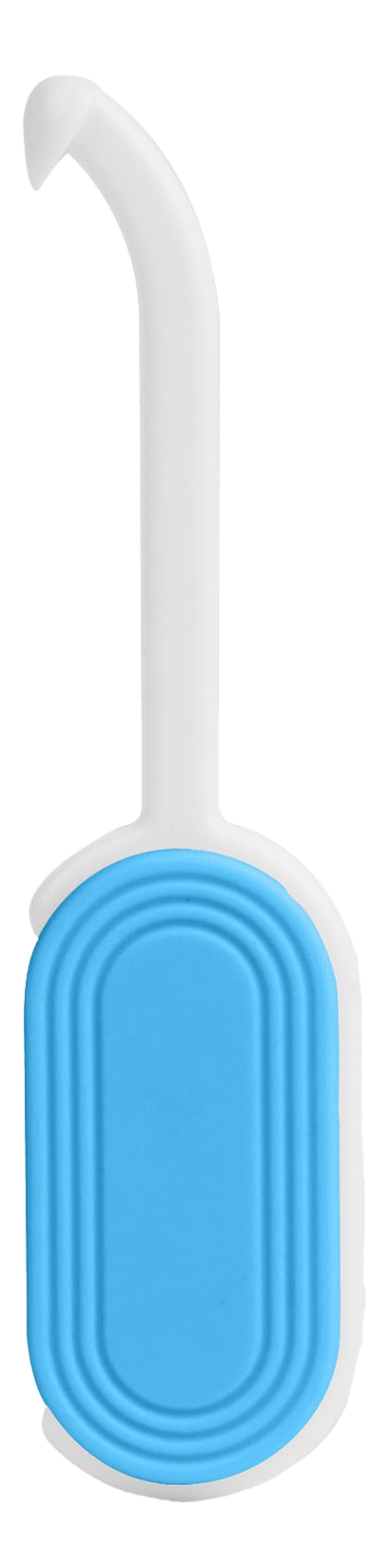 The chewie
 22 hours a day
Now the one number that matters most:
Below 22 hours, the teeth stop keeping up with the plan — and compliance, not the plastic, becomes the thing that decides the result.
Changing to the next set
Change at night, just before bed, and rinse the new tray first — moving up at night lets the tightest hours pass during sleep. But there’s a gate: a new set only goes in when the current one fits snugly, with no gaps. If the aligner isn’t fully seated, the patient stays on it and keeps chewing it down — they never advance a set to catch up. Skipping ahead onto a tray that doesn’t fit is exactly how tracking is lost.
Rules that protect the case
- Keep every previous tray, and bring at least the last three sets to every appointment — they’re the fallback if a step has to be repeated.
- If the patient finishes the final aligner before the next visit, they keep wearing it — they don’t stop.
- Whenever a tray is out of the mouth, it goes into the case, with the chewie inside — not a napkin, not a pocket. Most lost aligners are lost wrapped in a tissue at a restaurant.
What’s normal — and what isn’t
Set expectations so normal doesn’t trigger a panicked call. New trays feel tight; there may be mild soreness for a day or two and a brief lisp that fades as the tongue adapts — all expected. Not normal: a tray that won’t seat, or an attachment that’s come off — those bring the patient back. And say the core rule plainly: the aligners only move teeth while they’re in the mouth.
Key takeaways
Check the case, seat the first fit fully, and teach the patient to run it — 22 hours a day, water only, chew to seat, change at night, keep the last three sets, and store it in the case. Delivery is where a designed plan becomes a moving one, and the visit that most decides whether the case tracks.
Shafaf partners with trained dentists across Iraq and the region. Talk to us about partnering or find a Shafaf provider.